IELTS Goes Fully Digital from Mid-2026; PTE & Duolingo Also Tighten Rules
IELTS Goes Fully Digital from Mid-2026; PTE & Duolingo Tighten Rules
In a major shift for study abroad aspirants, English proficiency tests are undergoing significant changes in 2026, directly impacting how Indian students prepare and perform.
IELTS Moves Fully Computer-Based
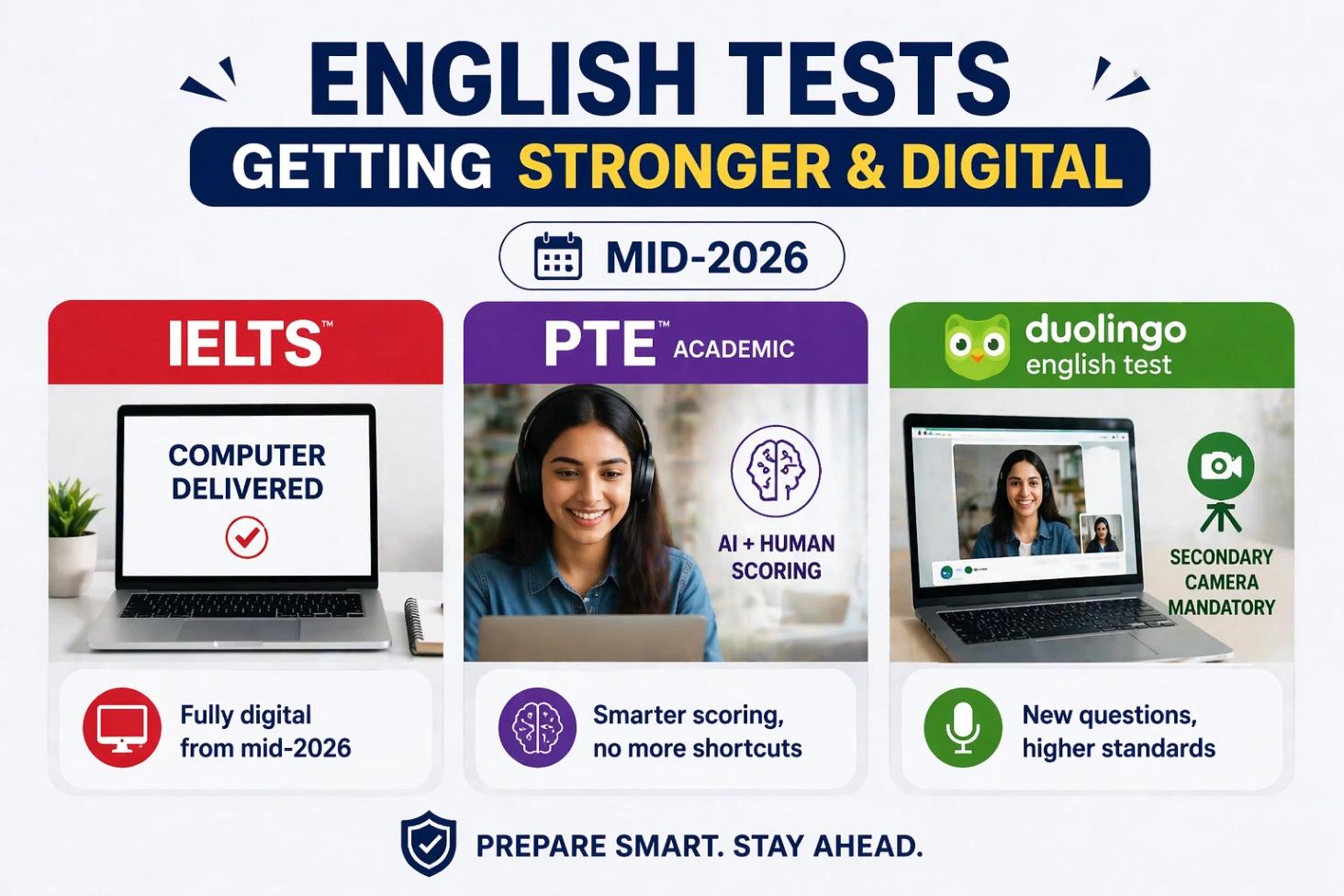
From mid-2026, IELTS will eliminate paper-based exams globally, transitioning entirely to computer-delivered testing. This move is aimed at improving efficiency, faster results, and standardized evaluation.
However, to support students who prefer traditional writing, IELTS is introducing a “Writing on Paper” option in select locations—a hybrid approach that still retains some flexibility.
👉 What this means:
- Faster result turnaround
- Increased reliance on typing speed and digital comfort
- Limited availability of handwritten writing option
PTE Academic Gets Smarter (and Stricter)
PTE Academic has upgraded its evaluation system to a hybrid AI + human scoring model.
Previously, many students relied on templates and memorized responses—especially in speaking sections. This is no longer effective.
👉 New reality:
- Focus on natural, spontaneous speaking
- Better grammar, fluency, and structure required
- AI checks + human validation = stricter scoring
Duolingo English Test Raises Security & Difficulty
The Duolingo English Test (DET), popular for its convenience, has now introduced stricter monitoring:
- Mandatory secondary camera setup
- Removal of Read-Aloud questions
- Introduction of Interactive Speaking tasks
👉 Impact:
- Higher test integrity
- More real-time speaking ability required
- Reduced chances of shortcuts or malpractice
What Indian Students Should Do Now
- Start preparation with updated 2026 test formats
- Avoid outdated templates or shortcuts
- Practice computer-based mock tests regularly
- Focus on real communication skills, not memorization